
Between policies, people, and practice
Written by Sofia Salgado
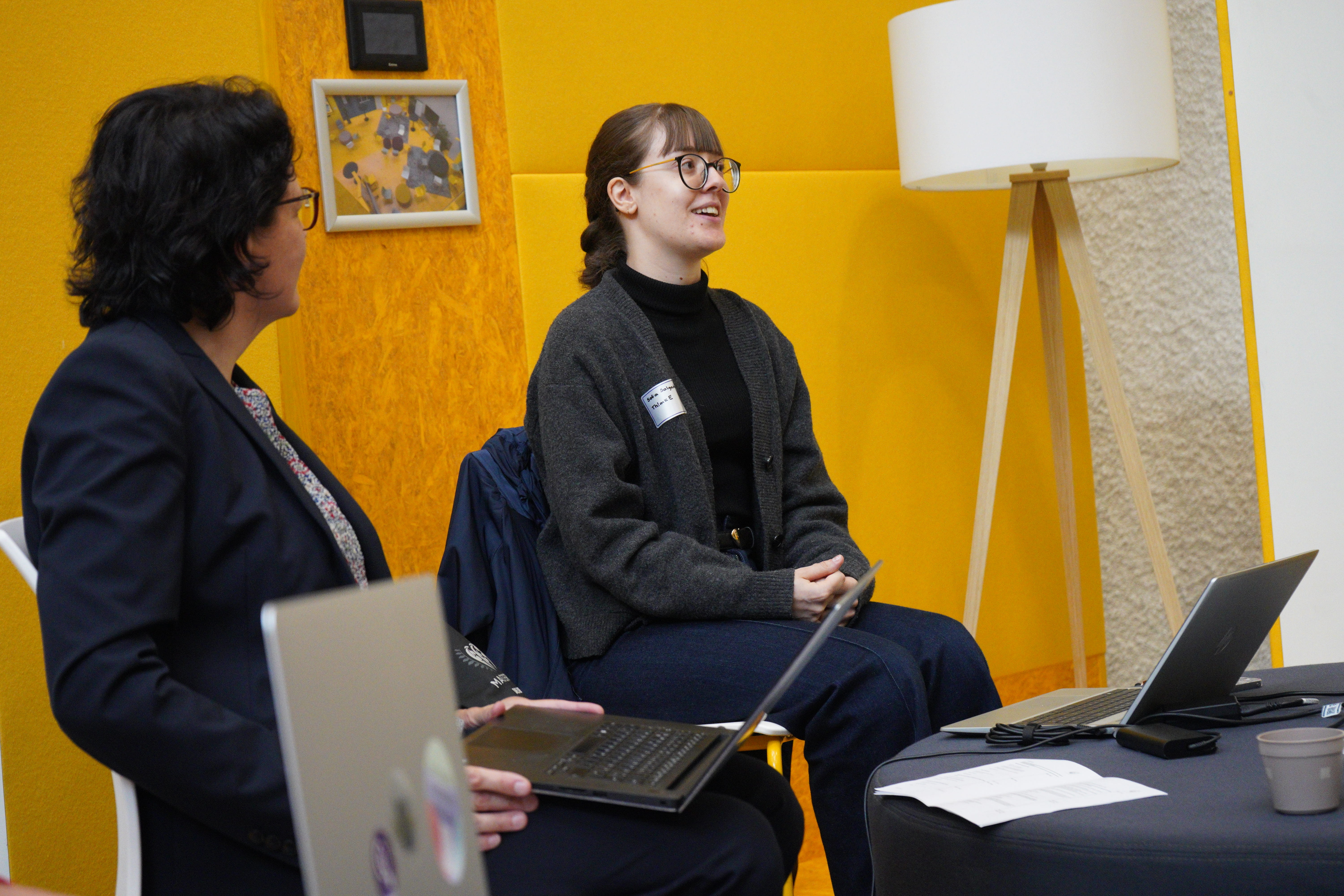
When I joined Th!nk E, I was curious about how my psychology background would fit into the world of energy transition. I knew the human dimension was part of the equation, but it’s one thing to understand that in theory, and another to see how central it becomes in practice.
This became clearer while working on JustREACH, a project focused on supporting fair and resilient climate adaptation across different regions in Europe. At its core, the project looks at how adaptation strategies are developed and implemented, recognising that these processes go beyond plans and policies and involve balancing different perspectives, priorities, and constraints.
Understanding systems in practice
As part of this work, I contributed to desk research, interviews, and stakeholder mapping exercises across three pilot regions: Athens, Belfast, and Nouvelle-Aquitaine.Rather than looking only at climate risks, we tried to understand the systems around them: who is involved, how decisions are made, where coordination works or breaks down, and which barriers make adaptation more difficult.
One of the most interesting parts of the process was how deeply we immersed ourselves in each territory. We went through local policies, municipal documents, news articles, research papers, statistics, and social media pages. At some point, it genuinely felt like I knew these regions better than my own.
The more we explored, the more apparent it became that systems often function very differently in practice than they appear on paper. Policies and strategies can appear very coherent, but implementation often depends on relationships, trust, coordination, and the work of intermediary actors such as NGOs, community organisations, and local networks. Across all pilots, it became clear that adaptation is rarely just about technical solutions, but also about whether people trust the process, see its relevance to their daily lives, and have the capacity to act on it.
Shared challenges across different territories
Despite their differences, the researched regions often face similar challenges. One of the strongest insights I took away from this work was how dependent climate adaptation is on intermediary and community actors. Formal institutions play an important role, but many adaptation efforts also rely heavily on NGOs, local associations, cooperatives, and other trusted local organisations that helped bridge the gap between institutions and communities. These actors often have a deeper understanding of local realities and stronger community relationships than the institutions with the most formal power.
Another recurring pattern was the importance of making adaptation tangible. Whether in urban neighbourhoods in Athens, community initiatives in Belfast, or agricultural contexts in Nouvelle-Aquitaine, engagement is much stronger when adaptation connected to practical everyday realities rather than abstract climate discussions. In many ways, successful adaptation depends less on persuading people, and more on making change feel relevant, realistic, and worthwhile in their daily lives.
A multidisciplinary approach to adaptation
One of the most rewarding aspects of working on projects like JustREACH has been working across disciplines and perspectives, moving between technical analysis, governance structures, stakeholder engagement, and broader social dynamics. Experiences like this also highlight the value of Th!nk E’s multidisciplinary approach, where technical, social, and governance perspectives all contribute to understanding how climate adaptation takes shape within real communities and systems.
As the project moves into its next phase of stakeholder workshops across the pilot regions, one conclusion stands out to me: while every territory experiences climate adaptation differently, many of the core challenges around trust, coordination, participation, and implementation are ultimately shared. Understanding these human dynamics is not separate from climate adaptation, but an essential part of making it work.


Dive into our knowledge.
Explore our insights, tools, and research to inform, guide, and accelerate the energy transition.
.jpg)




Questions, ideas, or expertise to share?
We’re always happy to connect, answer questions, and explore ways to collaborate.


